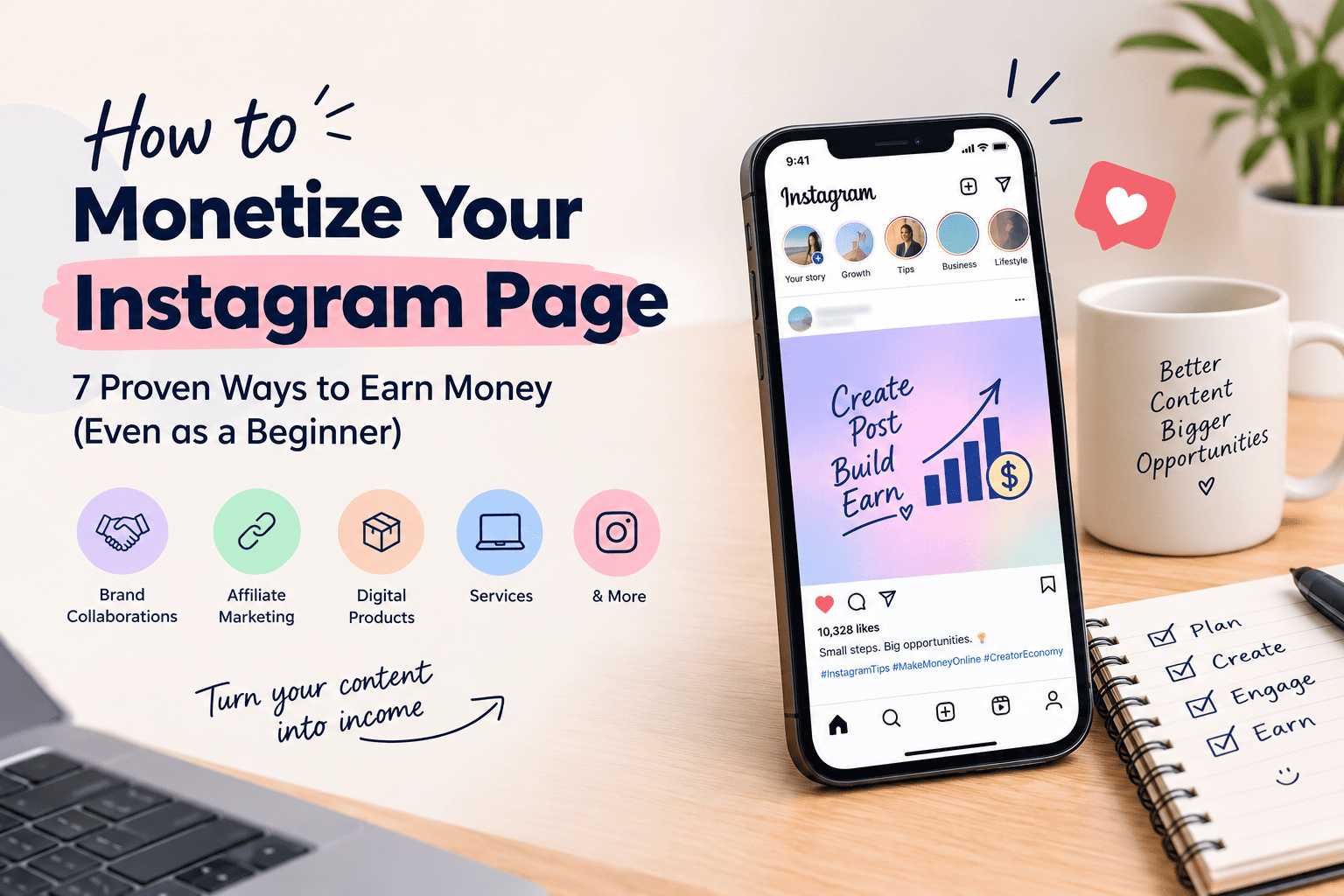
Starting an Instagram page is easy. Turning it into a source of income is where things get interesting. Many people assume they need hundreds of thousands of followers before brands will pay them, but that isn’t always true. A smaller page with a clearly defined audience, useful content, and an engaged community can sometimes be more valuable to a business than a much larger account with little interaction.
The key is understanding that Instagram monetization is not one single earning method. It can involve brand collaborations, affiliate marketing, selling products, offering services, paid subscriptions, and platform-specific creator features.
If you’re planning to start a new page, including a faceless Instagram account, you can begin building a monetization strategy from day one. You don’t need to earn immediately, but you should know what kind of audience you’re trying to attract and how that audience could eventually support your work.
What Does Instagram Monetization Mean?
Instagram monetization simply means generating income through your Instagram presence. You might earn directly through eligible Instagram features or use the platform to attract customers, promote products, and build a business.
For example, a fitness creator could collaborate with a sportswear brand. A page sharing productivity tips could recommend useful software through affiliate links. A faceless account covering digital marketing could sell social media templates or offer consulting services.
These accounts may have completely different audiences and business models, yet all can use Instagram as an income-generating channel.
Before choosing a method, decide whether you want to earn from your content, sell something of your own, or use your page to promote another business. Your answer will influence the type of content you publish and the audience you need to attract.
7 Ways to Monetize an Instagram Page
1. Brand Collaborations and Sponsored Posts
Brand collaborations are among the most familiar ways creators earn money on Instagram. A company pays a creator to feature its product or service through a Reel, Story, carousel, or another agreed format.
Imagine running a page about AI tools and useful websites. A software company might approach you to demonstrate its product to your audience. Similarly, a fashion page could collaborate with a clothing brand, while a travel page could work with hotels or travel services.
You don’t necessarily need a massive following to attract these opportunities. Brands may consider audience relevance, engagement, content quality, and whether your followers match their target customers.
To get started, create a few strong examples of the content you can produce. Prepare a simple media kit containing your niche, audience demographics, average reach, engagement information, and collaboration options. You can also contact relevant brands directly with a concise, personalised proposal.
Instagram’s Creator Marketplace announcement explains how eligible creators can connect with businesses through Instagram’s partnership tools.
Remember to disclose paid partnerships properly. Instagram requires the paid partnership label for branded content covered by its policies, including certain gifted-product and affiliate arrangements.
2. Affiliate Marketing
Affiliate marketing allows you to earn a commission when someone purchases a product or completes another qualifying action through your referral link.
Suppose your Instagram page reviews useful websites, design tools, or productivity software. You could recommend a product you genuinely find useful and direct interested followers to your affiliate link. If someone makes an eligible purchase, you may receive a commission according to the programme’s terms.
The advantage is that you don’t have to manufacture a product, manage inventory, or handle shipping.
However, affiliate marketing works best when recommendations are relevant to your audience. Promoting random products simply because they offer high commissions can damage trust and reduce engagement.
Start by researching legitimate affiliate programmes in your niche. Check their commission structures, payment thresholds, cookie durations, and promotional rules. You should also disclose affiliate relationships clearly, in accordance with applicable advertising requirements and platform policies.
For a new page, honest demonstrations and comparisons are usually more useful than repeatedly posting sales messages.
3. Sell Your Own Digital Products
If you have knowledge or skills that people want to learn, digital products can be an attractive monetization option.
Examples include:
- Canva templates and social media post designs
- E-books and practical guides
- Study notes and revision resources
- Content calendars and planning sheets
- Notion templates and productivity resources
- Beginner-friendly courses or workshops
Consider a faceless Instagram page focused on SEO. Instead of relying entirely on brand deals, its owner could create a keyword research spreadsheet or a content planning template and sell it through a website.
This model gives you more control over your product, pricing, and customer experience. However, sales are not automatic. You need a useful product, a reliable checkout process, and content that demonstrates why someone might need it.
Start with a small product that solves one specific problem. Feedback from early customers can help you improve it before investing time in a larger course or product range.
4. Offer Services Through Instagram
Instagram can also work as a portfolio and lead-generation channel.
A graphic designer could share before-and-after designs. A video editor could publish short editing breakdowns. An SEO professional could explain common website problems and show how to address them.
The page attracts people who need the skill, while the profile gives potential clients an easy way to understand the service and get in touch.
This can be especially useful for beginners who have professional skills but don’t yet have a large audience. You might only need a few relevant clients rather than thousands of followers.
Make your bio clear, show examples of your work, explain the services you offer, and provide a straightforward way to contact you. Avoid making claims you cannot support, and use genuine examples rather than fabricated results.
5. Instagram Gifts and Subscriptions
Instagram offers certain built-in monetization features, including Gifts and Subscriptions, to eligible creators in supported markets.
Gifts allow eligible creators to receive virtual gifts from followers who want to support their Reels. Subscriptions allow eligible creators to offer paying subscribers exclusive content or experiences for a recurring fee.
Availability, account requirements, age restrictions, and other eligibility conditions can vary. Not every account will have access to every feature.
To check your options, open Instagram and visit your Professional Dashboard. Look for the monetization section and review the features available to your account.
You can also consult Meta’s official creator monetization announcements for background on its creator earning tools. Because platform features change, always confirm current requirements inside Instagram before planning your income around a particular feature.
These tools are worth exploring, but they should not be your only monetization plan. You may be able to build income through services, affiliate marketing, or brand collaborations even when a particular platform feature is unavailable.
6. Promote Physical Products
If you have your own business, Instagram can help you introduce products to potential customers.
This could include clothing, jewellery, stationery, home décor, handmade products, or other items relevant to your audience. Content can demonstrate how a product works, answer common questions, show customer feedback with permission, and explain what makes it useful.
A page focused on budget-friendly desk setups, for instance, could feature practical workspace accessories and direct interested users to the business website.
Keep product information accurate, use original or properly licensed visuals, and provide clear information about pricing, delivery, and returns. If you work with another brand or receive compensation for a promotion, follow the relevant disclosure requirements.
The goal is to make purchasing straightforward without turning every post into an advertisement.
7. Use Instagram to Drive Traffic to Your Website
Instagram does not have to be the final destination for your audience. It can also introduce people to a blog, online store, newsletter, or other platform where you have more control over the customer journey.
For example, a digital marketing page could publish short tips on Instagram and direct interested users to detailed tutorials on its website. A newsletter creator could share useful snippets and invite people to subscribe for more in-depth resources.
This approach can be particularly helpful if you already publish articles or operate a website. You can repurpose your existing knowledge into Reels and carousels, then direct people to relevant resources.
If you want to diversify beyond Instagram, SoSoActive’s guide on how to get your first 1,000 Pinterest followers offers another perspective on building an audience through a discovery-focused platform. You can also explore its guide to creating a Telegram channel and getting your first 100 members for ideas on building a community outside social media feeds.
How Many Followers Do You Need to Monetize Instagram?
There is no universal follower count that guarantees monetization. The number you need depends on the earning method, audience, niche, and the rules of the programme you want to join.
A small account may attract a relevant local business or generate its first service enquiry. A larger account might have more opportunities for sponsorships, but a high follower count does not automatically translate into sales.
For built-in features such as Gifts or Subscriptions, Instagram may impose specific eligibility conditions. Check the current requirements rather than relying on a follower threshold mentioned in an old tutorial.
Instead of focusing exclusively on followers, monitor the metrics that connect to your goal:
- Reach: How many unique accounts see your content?
- Engagement: Are people commenting, saving, or sharing your posts?
- Profile visits: Does your content encourage people to learn more?
- Link clicks and enquiries: Are interested viewers taking the next step?
- Conversions: Are those actions resulting in sales, sign-ups, or paid work?
These measurements help you understand whether your content is attracting the right people.
How to Start Monetizing a New Instagram Page
If you’re starting from zero, use a simple plan rather than trying every earning method at once.
Step 1: Choose a Focused Niche
Select a topic you can cover consistently and that has a clear audience. Examples include AI tools, personal finance education, fashion, fitness, productivity, or educational resources.
Step 2: Create Useful, Original Content
Publish Reels, carousels, and Stories that answer questions, solve problems, or entertain a specific audience. A faceless page can use screen recordings, narration, animations, and licensed footage, provided the content adds genuine value.
Step 3: Set Up Your Profile Properly
Use a clear profile image, a concise bio, and a relevant call to action. Switch to a professional account if appropriate so you can access insights and any eligible professional tools.
Step 4: Build Trust Before Pushing Sales
Recommend only products you understand, respond to genuine questions, and make your content useful even when it isn’t promoting anything.
Step 5: Test One Monetization Method
Choose the method that fits your niche. For example, a service-based page might focus on client enquiries, while a tutorial page might test an affiliate programme. Track results before adding more income streams.
Step 6: Review Your Results
Look at which topics attract relevant viewers and which posts generate meaningful actions. Use those insights to improve your content and refine your offer.
Consistency matters, but publishing more posts will not automatically produce more income. The aim is to learn what your audience values and build a business model around that demand.
Common Instagram Monetization Mistakes to Avoid
Buying followers, copying other creators, and chasing every viral trend can undermine a page’s long-term potential. Fake engagement does not create a reliable customer base, and unoriginal content may limit opportunities or create copyright problems.
Another common mistake is accepting every brand deal. A promotion that conflicts with your niche or audience’s interests may generate a short-term payment while weakening trust.
Finally, don’t assume that Instagram will pay you simply because your Reels receive views. Platform payouts and creator features depend on availability, eligibility, and programme-specific terms. Direct income through brands, products, services, and affiliates follows different rules.
Frequently Asked Questions
1. Can I monetize an Instagram page without showing my face?
Yes. Faceless pages can earn through affiliate marketing, sponsorships, digital products, services, and eligible platform features. Screen recordings, original graphics, tutorials, and narrated videos are useful formats.
2. Can a new Instagram account earn money?
It is possible, although income is not guaranteed. A new account might generate a client enquiry, sell a relevant digital product, or earn an affiliate commission before it develops a large following. Built-in monetization features may have additional eligibility requirements.
3. Does Instagram pay for every 1,000 views?
No universal payment rate applies to every Instagram account or Reel. Earnings depend on the specific monetization programme, eligibility, and applicable terms. Views alone do not guarantee a payment.
4. Which Instagram monetization method is best for beginners?
It depends on your strengths. Affiliate marketing may suit product-focused pages, services may suit people with marketable skills, and digital products may work well for creators who can solve a specific problem. Choose one method that matches your audience.
5. How long does it take to monetize an Instagram page?
There is no fixed timeline. Some pages may generate an early sale or client enquiry, while others need months of consistent publishing and testing. Results depend on audience demand, content quality, distribution, and the monetization method.
Final Thoughts
Monetizing an Instagram page is less about reaching an impressive follower count and more about building an audience that trusts what you share. A focused niche, useful content, and a sensible earning strategy give you a stronger starting point than chasing viral numbers alone.
You can start with one income stream, learn from real audience behaviour, and expand as your page develops. Whether you choose a faceless educational account, a product-focused page, or a service-based profile, keep the audience’s needs at the centre of your decisions.
Instagram can open the door to earning opportunities, but sustainable income comes from providing something people genuinely value.